



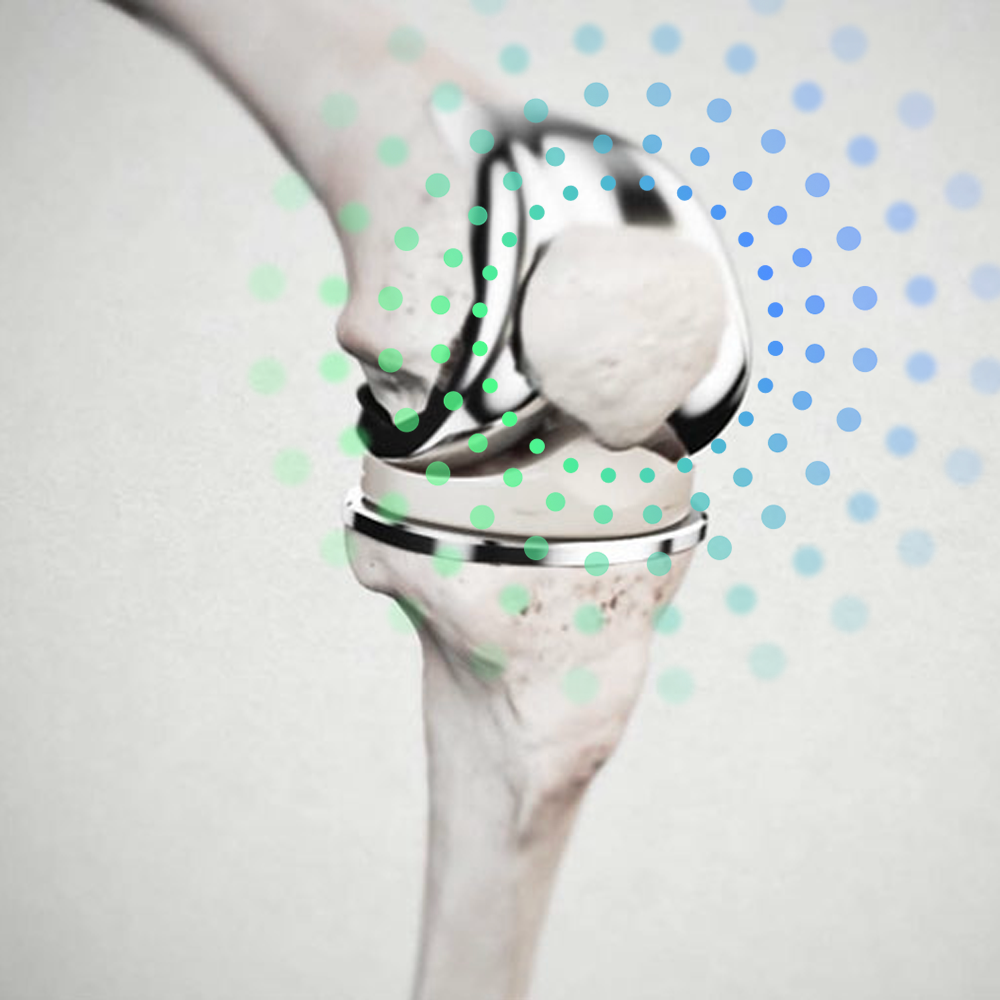


During surgery, the worn-out surfaces of the thigh bone, shin bone, and sometimes the kneecap are resurfaced and replaced with prosthetic parts. A new knee joint typically functions very close to normal, and most implants last 15 years or more. The procedure is safe, with long-term success rates around 97% after 12 years of follow-up.
Your doctor may recommend knee replacement if you experience:
Total Knee Replacement (TKR)
For patients with arthritis in both knees, a bilateral replacement may be recommended. Modern techniques, including computer-assisted navigation, help surgeons achieve precise implant alignment and improve long-term outcomes.
In some patients, only one side of the knee is damaged. In these cases, a partial or unicondylar knee replacement may be performed. This procedure is less extensive, typically less costly, and allows for faster recovery. Only your surgeon can determine if you are a candidate for this option.
Robotic systems help surgeons plan and perform knee replacement with greater accuracy. Benefits include better implant alignment, less tissue damage, faster recovery, and improved long-term outcomes. The surgeon remains in full control—the robot simply enhances precision.
The knee is a hinge joint where the thigh bone (femur) and shin bone (tibia) meet. The ends of the bones are cushioned by smooth cartilage, supported by ligaments, tendons, and muscles that provide stability and motion. When this cartilage wears out, bones rub against each other, causing pain, stiffness, and reduced mobility. Knee replacement restores these surfaces, giving back comfort and function.
Immediately After Surgery
With regular physiotherapy, most people experience significant pain relief, improved mobility, and better quality of life.
Joints are the areas where 2 or more bones meet. Most joints are mobile, allowing the bones to move Basically, the knee is 2 long leg bones held together by muscles, ligaments, and tendons. Each bone end is covered with a layer of cartilage that absorbs shock and protect the knee.

At our Superspecialty Hospital, we bring together advanced technology, expert doctors, and compassionate care to offer world-class treatment across multiple specialties. Your health is our mission, and healing is our promise.
© 2025 Shree Venkateshwara Superspecialty Hospital. All rights reserved.
Developed by Creative Canvas