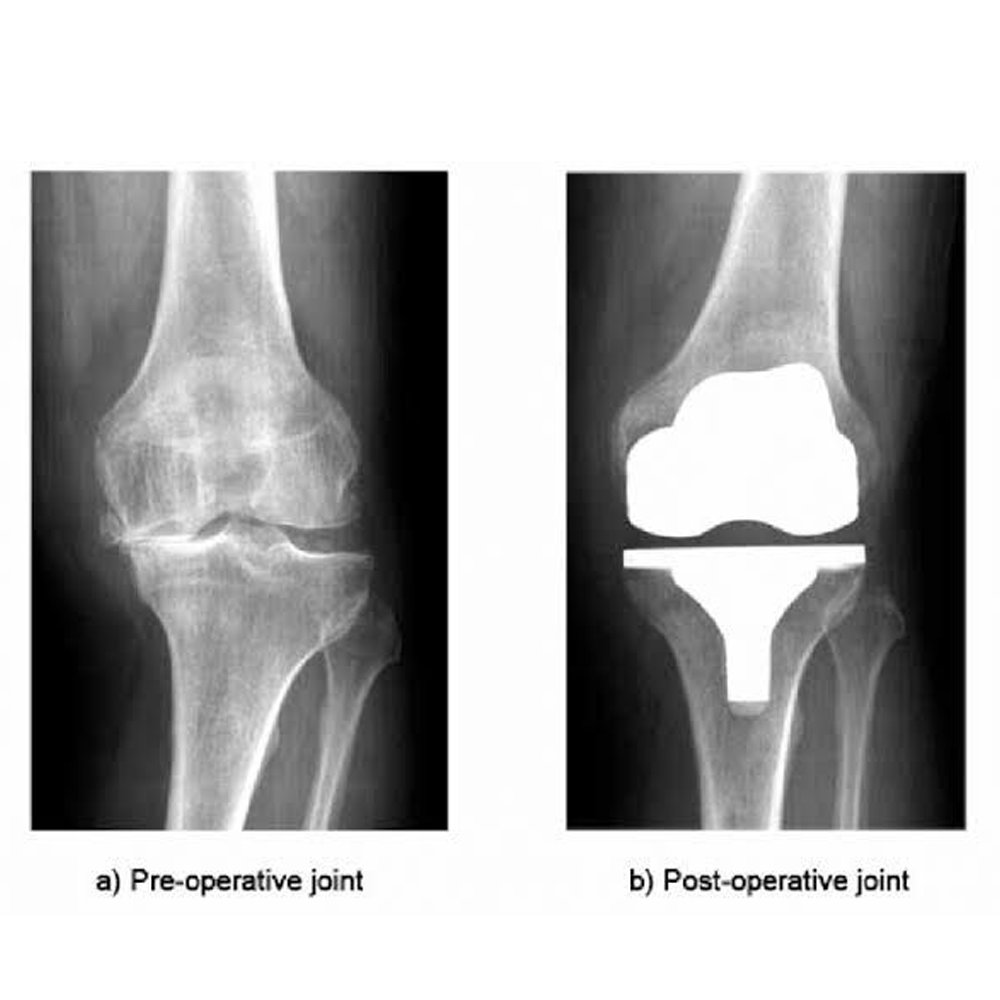
Orthopedic is the branch of medicine that deals with the bones, joints, muscles, ligaments, and tendons. It focuses on diagnosing and treating problems of the musculoskeletal system, such as fractures, arthritis, and sports injuries, helping people move and live without pain.
Orthopedics plays a vital role in keeping the body strong and mobile. From treating fractures and joint pain to performing surgeries like knee or hip replacements, orthopedic care ensures a better quality of life and long-term physical well-being.
Who May Need Orthopedic ?
Your doctor may recommend knee replacement if you experience:
People with bone fractures or joint pain
Those suffering from arthritis or back pain
Athletes with sports injuries
Children with bone or growth deformities
Elderly individuals with joint wear and tear
Anyone recovering from accidents or surgeries affecting movement
Types of Orthopedic
Total Orthopedic (TO)
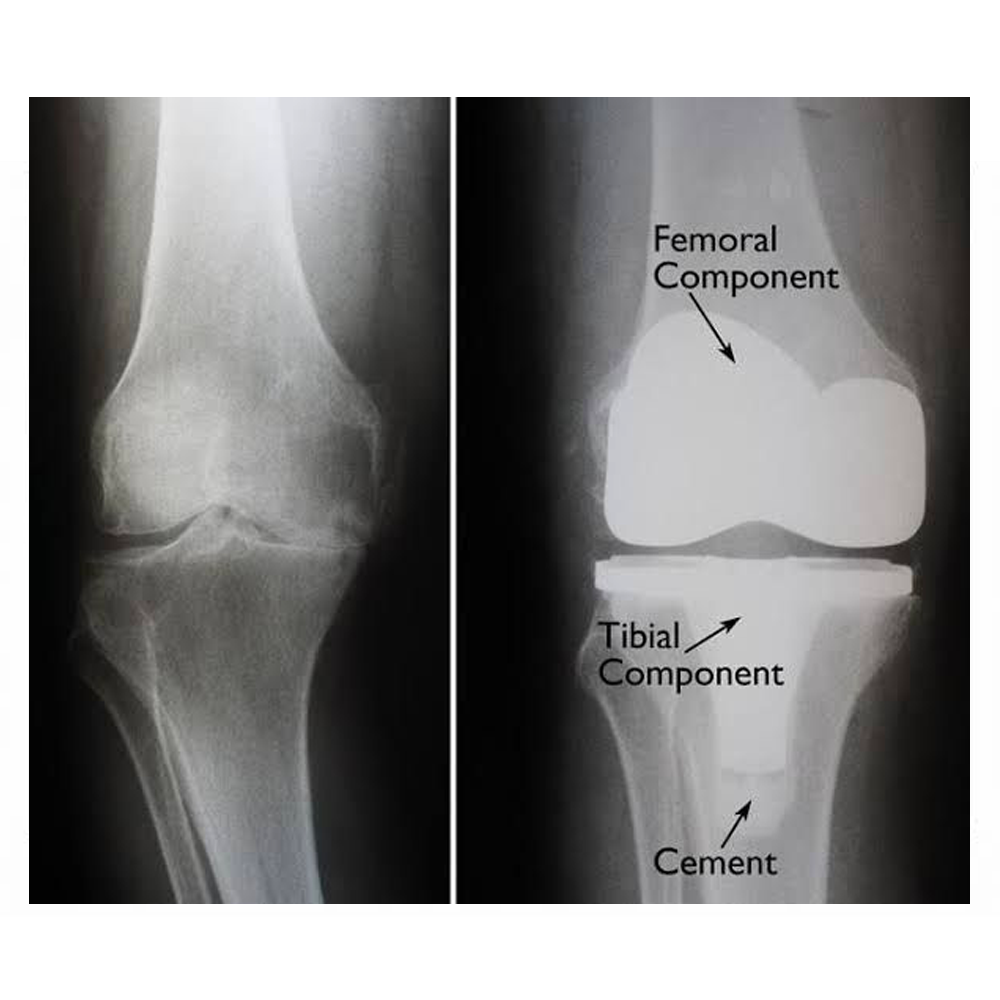
Total Orthopedic, the entire joint surface is replaced with three prosthetic components:
Femoral component (thigh bone): Made of metal, covers the end of the femur
Tibial component (shin bone): A metal base with a durable medical-grade plastic (UHMWPE) insert
Patellar component (kneecap): A plastic dome that may or may not be replaced depending on your condition
For patients with arthritis in both knees, a bilateral replacement may be recommended. Modern techniques, including computer-assisted navigation, help surgeons achieve precise implant alignment and improve long-term outcomes.
Partial (Unicondylar) Orthopedic
Partial (Unicondylar) Orthopedic refers to a surgical procedure where only one part (compartment) of a joint—usually the knee—is replaced or treated, instead of the entire joint.
It’s commonly known as Partial or Unicondylar Knee Replacement. In this procedure, only the damaged portion of the knee (either the inner or outer side) is replaced with an artificial implant, while the healthy bone and cartilage are preserved.
Robotic-Assisted Orthopedic
Robotic systems help surgeons plan and perform knee replacement with greater accuracy. Benefits include better implant alignment, less tissue damage, faster recovery, and improved long-term outcomes. The surgeon remains in full control—the robot simply enhances precision.
Understanding the Knee Joint
The knee is a hinge joint where the thigh bone (femur) and shin bone (tibia) meet. The ends of the bones are cushioned by smooth cartilage, supported by ligaments, tendons, and muscles that provide stability and motion. When this cartilage wears out, bones rub against each other, causing pain, stiffness, and reduced mobility. Knee replacement restores these surfaces, giving back comfort and function.
What to Expect After Surgery
Immediately After Surgery
You will be moved to a recovery area for monitoring.
A bandage and drain tube may be placed around your knee to reduce swelling and prevent infection.
An intravenous (IV) line delivers fluids, antibiotics, and sometimes blood transfusions.
In some cases, a urinary catheter may be used temporarily.
Your vital signs, such as heart rate and blood pressure, will be continuously monitored.
Physiotherapy and Recovery
First 24 hours: Gentle in-bed exercises are started under supervision.
Day 1–2: The drain is removed, and you may sit up with support.
Day 2–3: You will be encouraged to stand and take steps with a walker.
End of week 1: Walking with assistance becomes easier; you may use the restroom with a raised seat.
2 weeks: Stitches are removed.
3 weeks: Most patients can walk with a stick and gradually increase activity.
With regular physiotherapy, most people experience significant pain relief, improved mobility, and better quality of life.
Anatomy of the Orthopedic
The anatomy of orthopedics focuses on the musculoskeletal system, which provides the body with structure, support, and movement. It includes bones that form the body’s framework, joints that allow flexibility and motion, and muscles that power movement. Supporting structures such as tendons connect muscles to bones, while ligaments link bones together and stabilize joints. Cartilage covers the ends of bones in joints, reducing friction and allowing smooth motion. Together, these components enable mobility, strength, and balance, forming the foundation of orthopedic study and care.
Key Takeaways
Knee replacement is a safe and effective procedure for people with severe knee arthritis or long-term pain.
Both total and partial replacements are available depending on your condition.
Early physiotherapy and guided rehabilitation are essential for recovery.
Most implants last well over a decade, giving patients years of improved mobility and independence.
Dr. Shubham Tungenwar
Dr Shubham Tungenwar is a Consultant Orthopaedic Surgeon with a specialist focus on Hip and Knee Arthroplasty, Robotic Knee Surgery, Sports Injuries, Arthroscopy, and Complex Orthopaedic Trauma. He earned his MS and DNB in Orthopaedics from Topiwala National Medical College, Mumbai, where he also completed his medical training and went on to serve as a postgraduate resident and Senior Registrar for more than four years.
Dr Tungenwar undertook advanced fellowship training and an MCh in Hip & Knee Surgery and Robotic Knee Arthroplasty at Broadgreen and Aintree Hospitals in Liverpool, working alongside leading Hip & Knee consultants in the UK. He has also been awarded the International Diploma in Trauma & Orthopaedics by SICOT (Belgium).
With a strong belief in evidence-based practice, Dr Tungenwar is dedicated to improving outcomes and quality of life for patients with musculoskeletal conditions. He is passionate about applying the latest surgical techniques and technologies to deliver precise, effective, and patient-centred orthopaedic care.
 Open Monday-Saturday – 10 AM to 6 PM |
  24X7 Emergency Services
  +91 9172000604, +91 9172363604